
Nina Sakhnini
I research how people experience technology, then I use what I learn to make those experiences more human.
I uncover the human stories in technology and turn them into better experiences.
Technology should work for everyone. That's the impact I'm committed to building.
My work combines qualitative inquiry, behavioral data, and design to understand how people use technology, what shapes those experiences, and where things break down. I work across methods and modalities, from interviews and large-scale behavioral datasets to interactive systems and wearables.
I'm drawn to questions where the answer isn't obvious from the interface alone—where context, behavior, needs, and real life matter. My technical background lets me move from understanding a problem, to designing a thoughtful response, to building it.
When I'm not doing UX, I'm usually being outwitted by my toddler.
Selected Projects
My research spans digital health, environmental sensing, accessibility, and misinformation, with work published at leading HCI venues including CHI, IEEE ICHI, ASSETS, MobileHCI, and UbiComp.
Towards Meaningful Patient Portal Engagement for Older Adults
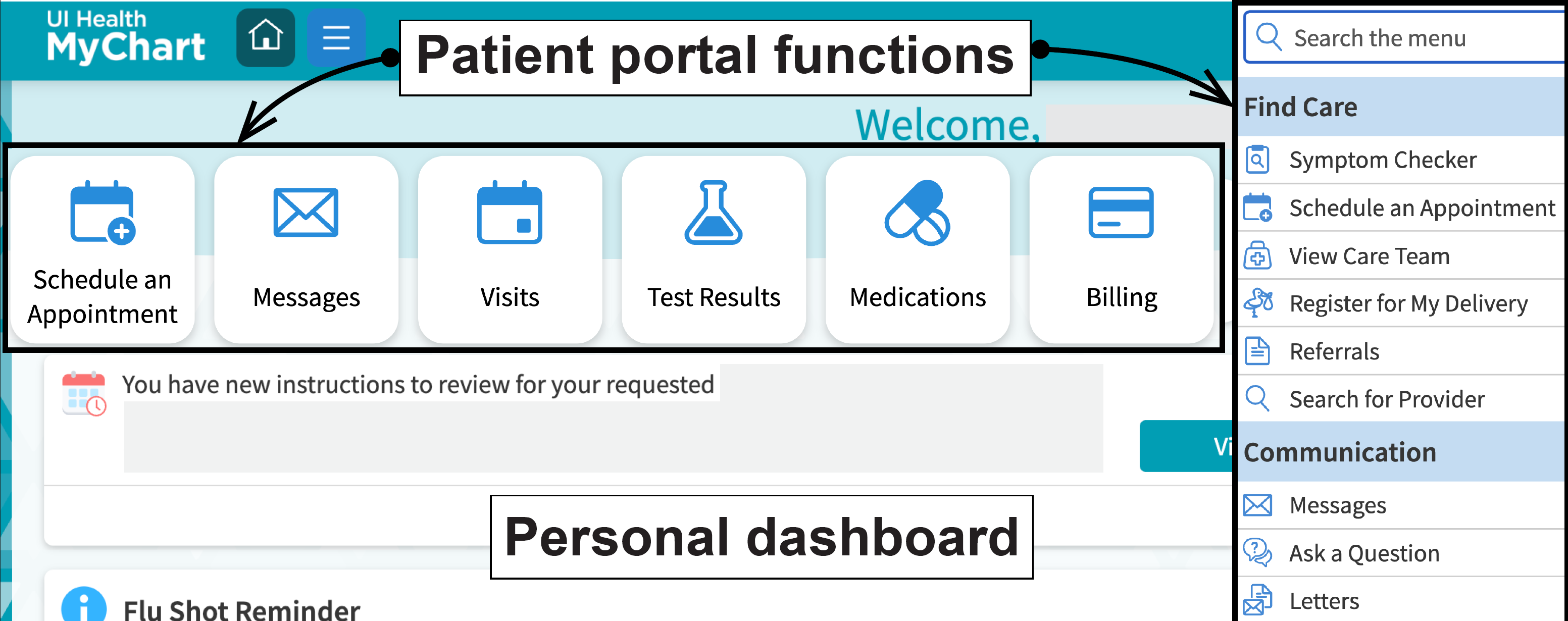
My dissertation focuses on understanding why older adults do not adopt or continue using patient portals, and what it takes to close that gap. Across multiple studies, I examine how real-world digital behavior reflects how older adults and people with ADRD engage with these systems, including patterns that may signal cognitive decline. At a broader level, my work synthesizes two decades of research on patient portal use among older adults. The consistent finding is not that older adults are unwilling or unable to use these tools, but that the barriers they face are largely driven by design and support gaps within the systems themselves. The goal of this work is to surface those gaps and inform the design of more accessible, inclusive digital health systems.
Full methodology available on request
Patient Portal Use Among Older Adults: A Systematic Review and Meta-Analysis More Older Adults Try Patient Portals in Recent Years, but Many Don't Continue: A Meta-AnalysisFrom Idea to Wearable: Personal Pollution Monitoring
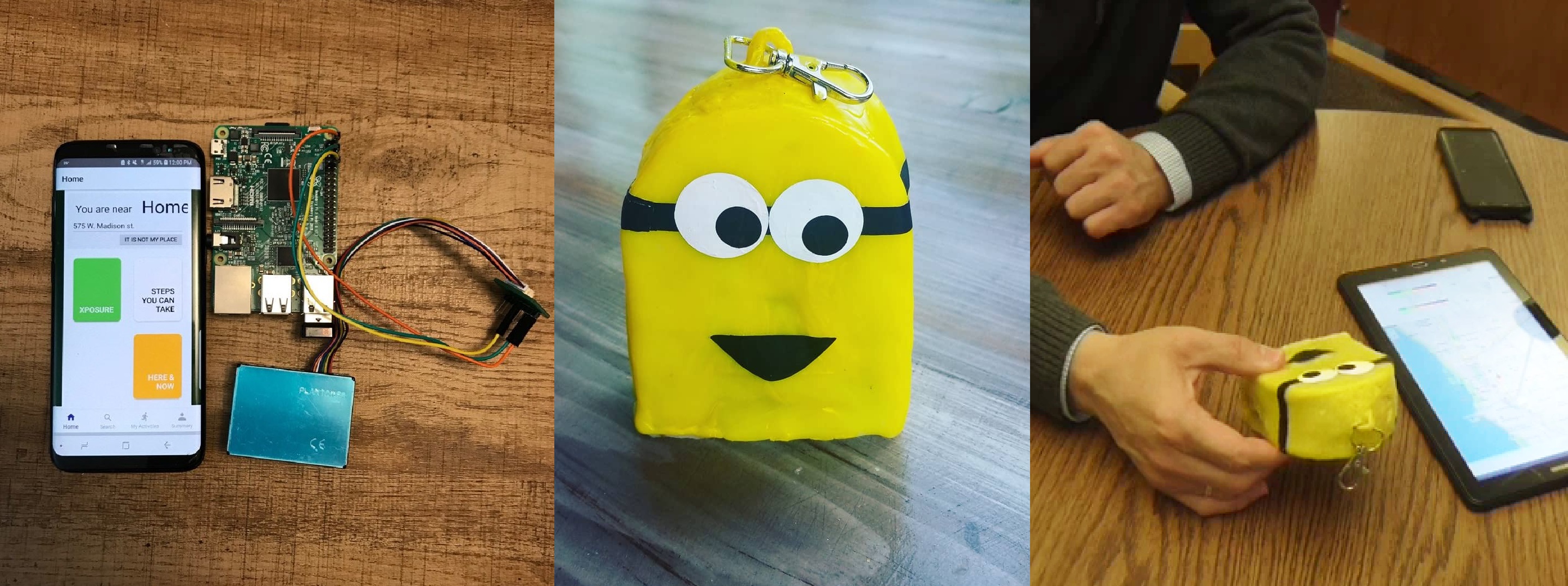
A four-year arc: two publications, a master's thesis, one hand-painted minion keychain, and a full end-to-end build. Designed and developed myCityMeter: hardware sensor unit, firmware, and an Android mobile app. I ran a mixed-methods study (n=321 survey + 7 technology probe interviews) to understand what people actually need from personal pollution monitoring. Key finding: the barrier is not the technology; it is the perceived lack of actionable next steps.
myCityMeter: Helping older adults manage the environmental risk factors for cognitive impairment Towards Self-Tracking Personal Pollution Exposure using Wearables (Master's Thesis) Personal Air Pollution Monitoring Technologies: User Practices and PreferencesWhy Older Adults Don't Use Fact-Checking Apps
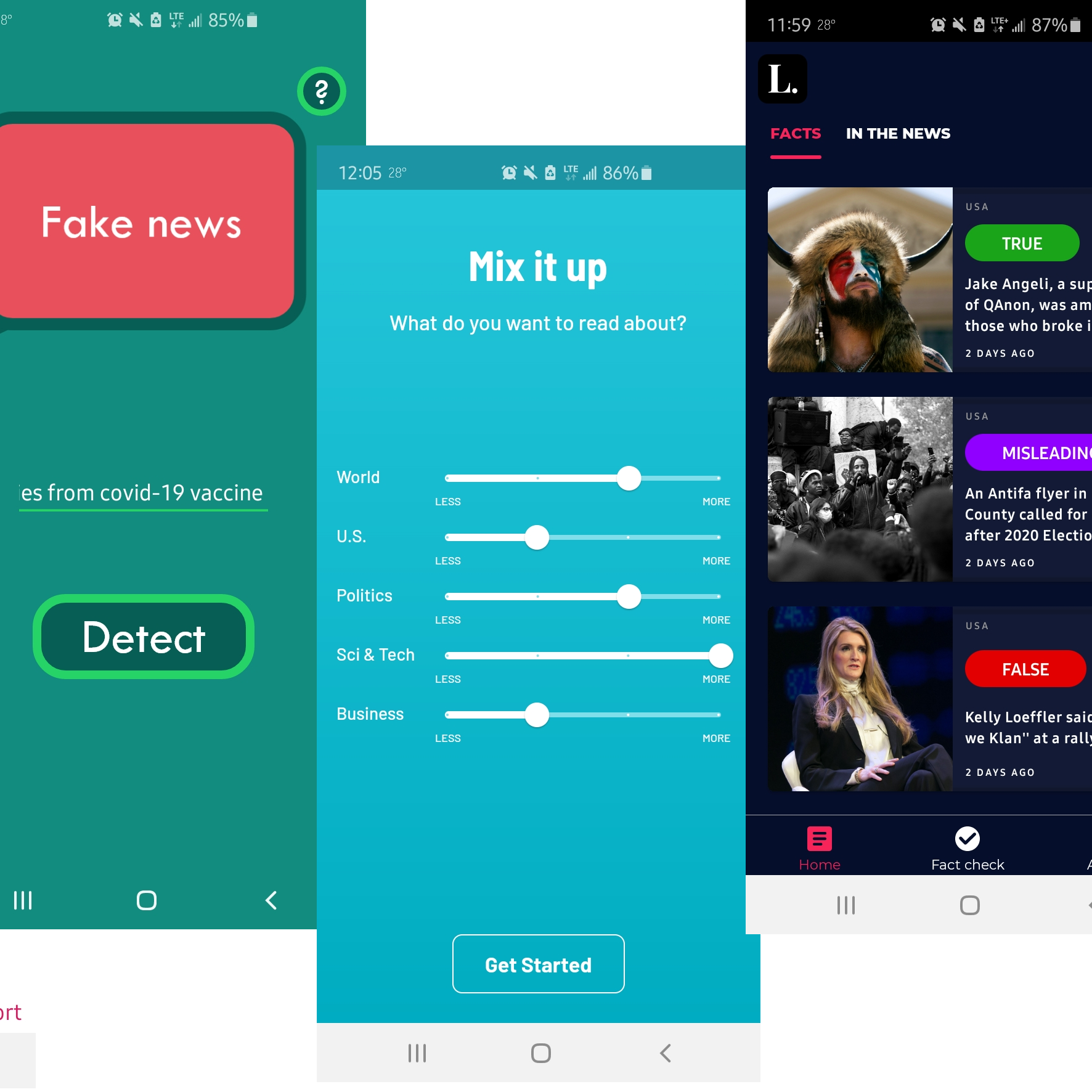
Sparked by COVID-19 misinformation. Led end-to-end: systematic review of 8,372 smartphone apps screened down to 45, plus 11 interviews with older adults in the US and Jordan. Not a single participant used a fact-checking app despite universal concern about misinformation. The gap is not a user failure; it is a design and trust problem.
A review of smartphone fact-checking apps and their (non) use among older adultsVirtual Mental Health Assessment Tool
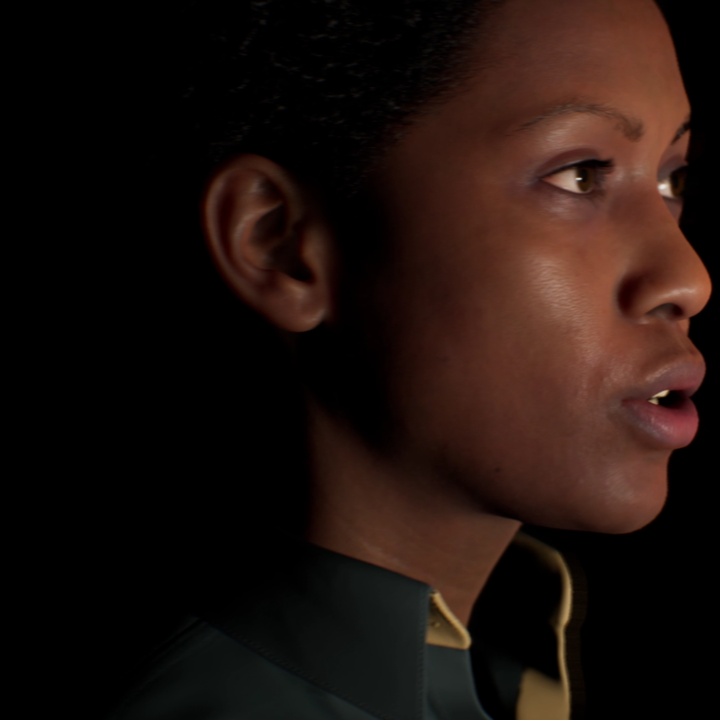
Built a fully functional tablet app using Unreal Engine and MetaHuman. The app showed a photorealistic avatar responding to user input with synchronized facial expressions and body language in real time, backed by Amazon Polly and supported by an AI speech agent. Designed for pre-clinical mental health screening with incarcerated women. Working prototype completed before the project continued with another team. This project represents the range I bring: AI system integration, clinical application, and the kind of research grounding that keeps technically ambitious work human.
Mobile Technology Support in Older Adults
Quantitative analysis on a survey study (n=138) examining how proficiency and emotional states shape older adults' preferences for tech support. Multiple regression and mediation analysis showed proficiency and confidence jointly predict preference for self-reliant support and its perceived effectiveness.
How proficiency and feelings impact the preference and perception of mobile technology support in older adultsCaterpillar Inc.
The work. Redesigned interactive elements and built UI components for an internal engineering platform used daily by Caterpillar engineers; modernizing legacy workflows and improving usability across core tasks. Partnered with product, engineering, and tech support stakeholders inside agile delivery cycles.
The research. Conducted user research with two distinct audiences, engineers using the software and the tech support team fielding their issues, to identify pain points, validate design directions, and translate findings into actionable design recommendations. Methods included usability testing, contextual interviews, and iterative design reviews with stakeholders.
What I took from it. An enterprise UI/UX practice focused on making complex systems actually work for the people using them. Specific details under NDA.
University of Illinois Chicago · UIC HCI Lab
The work. Lead mixed-methods research on how people (in particular older adults) engage with complex systems over time, and why that engagement breaks down. I own each study end to end: framing the question, IRB, instrument design, recruiting, fieldwork, analysis, and publication. Six peer-reviewed publications at CHI, ASSETS, MobileHCI, UbiComp, and IEEE ICHI.
The research. Studies range from 11-participant interview work to behavioral analysis across two million sessions, alongside end-to-end builds: a wearable sensor platform, a real-time conversational avatar, and machine learning pipelines over real interaction logs.
What I took from it. How to scope a question, choose methods that genuinely answer it, and carry a study through to a decision someone can act on. Peer reviewer for CHI, MobileHCI, and CSCW.
University of Illinois Chicago
The work. Involved in teaching Human-Computer Interaction, User Interface Design, Computer Design, and Programming Design; lecturing, designing assignments and rubrics, and advising student projects from concept through final critique.
The teaching. Most students met these systems for the first time in my classroom, so every concept had to be built from the ground up in plain language, without assuming background. 4.6/5 average instructor evaluation.
What I took from it. Making complex systems legible to people who did not build them, aligning with research communication.
From question to something real.
I start with the question, use the methods it calls for, and follow the evidence wherever it leads. That might end in a recommendation, a new direction, or something that needs to be built. When it does, I can take it from an idea or prototype to a working feature, system, or product.
Qualitative
- Semi-structured interviews
- Contextual inquiry & field studies
- Usability testing
- Storyboard & concept testing
- Focus groups
- Technology probes
- Participatory co-design
Quantitative
- Surveys
- Experimental design
- Behavioral log analysis
- Mixed-effects modeling
- Regression & mediation
- Clustering & segmentation
- Systematic review & meta-analysis
Deliverables
- Research roadmapping
- Personas
- Journey maps
- Design requirements
- IRB & research ops
Languages
- Python
- C++
- Java
- C#
- R
- JavaScript
Web & mobile
- HTML / CSS
- Node.js
- Express.js
- Responsive front-end development
- Interactive data tools
- REST APIs
- Android
- Flutter
- Build & deploy
Data, ML, and Visualization
- pandas
- Jupyter
- SQL
- DuckDB
- D3.js
- Machine learning
- Graph neural networks
Systems & hardware
- Software engineering
- Embedded firmware
- Qt / C++ desktop
- AWS
- Microcontrollers
- Fabrication
Interactive & 3D
- Game development
- Unreal Engine
- Unity
- MetaHuman
- 3D modeling
Design & collaboration
- Figma
- Low and high-fidelity prototyping
- Design systems
- Git